Defined the multi-cylinder motorcycle
This motorcycle — the development bridge
Reshaped the superbike market globally
Just as the 1968 Honda CB750 prototype program helped define the future of the multi-cylinder motorcycle nearly two decades earlier, the development of the GSX-R750 represents an equally significant milestone in the evolution of the modern high-performance sport motorcycle.
From 1945 through 2026, only a small number of motorcycles can legitimately be regarded as true watershed developments that altered the direction of motorcycle design and performance on a global scale. Among those few milestones, the creation of the GSX-R750 stands unquestionably as one of the most important.
The GSX-R750 did not merely introduce a new model; it fundamentally changed the expectations of what a production sport motorcycle could be.
Its lightweight construction, race-derived engineering, and uncompromising performance philosophy established a template that would influence virtually every major sport motorcycle manufacturer for decades to come. The modern sportbike category, as it exists today, can be traced directly to the concepts first developed and refined during the GSX-R750 program.
As such, this sole surviving development-phase GSX-R750 prototype represents far more than early examples of any production motorcycle. This motorcycle is a tangible artifact from one of the most important engineering and design programs in post-war motorcycling history, occupying a position in sport motorcycle development comparable to that held by the earliest CB750 prototype in the evolution of the modern multi-cylinder motorcycle.
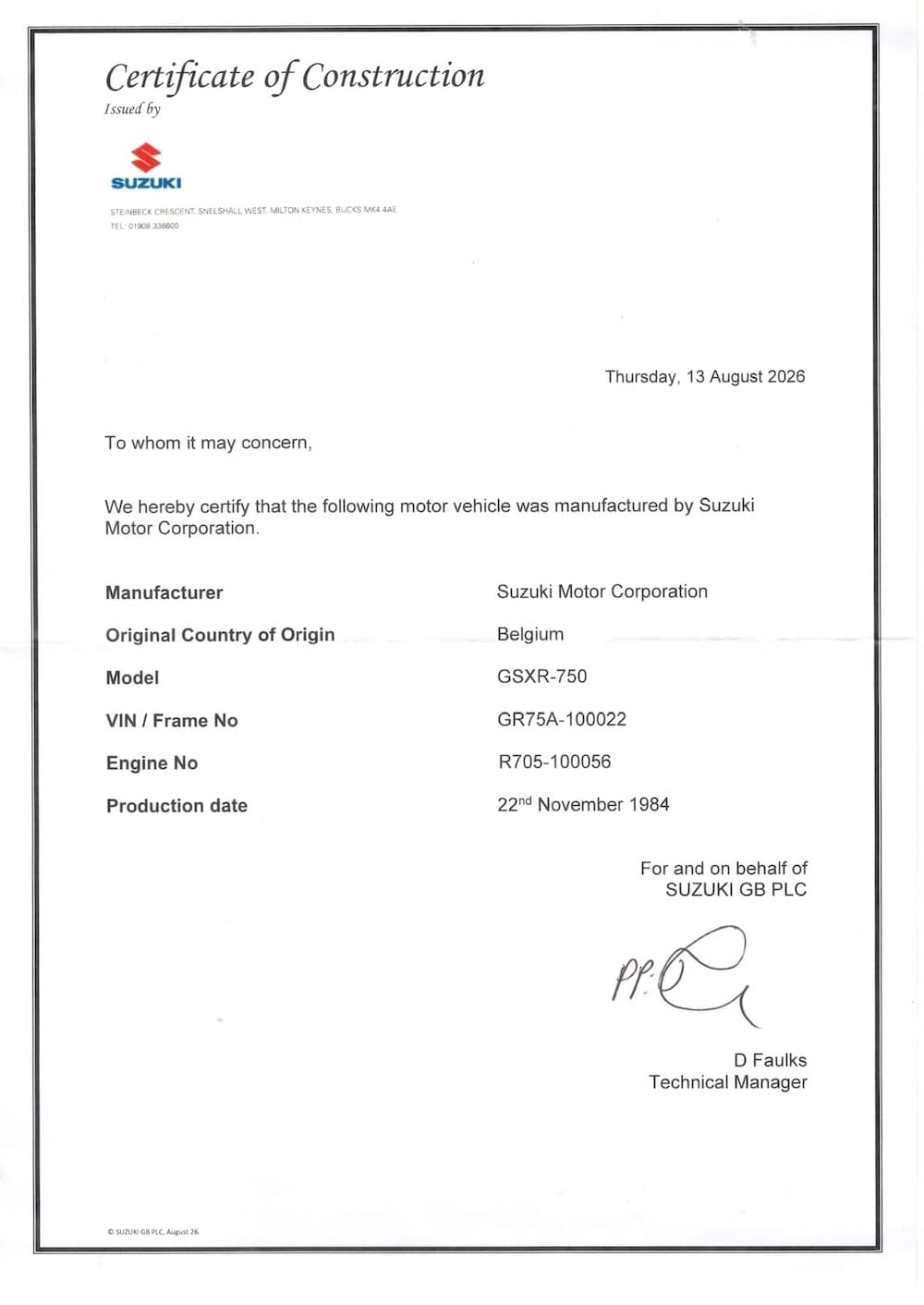
Certificate of Construction issued by Suzuki GB PLC, 13 August 2026
UPDATE FROM SUZUKI GB:
In August of 2026 Suzuki released an official certificate of construction, putting to rest speculation about the motorcycle's origin and purpose. This document confirms that the bike was in fact created as one of the very first prototypes for the Suzuki GSXR-750 series. With the location of construction listed as Belgium, we can state confidently that it was shipped there to be constructed out of parts. The timing is also, interestingly, just after the Cologne Motor Show in October 1984, but before the line's regular production start date in March 1985. As such, we can conclude that it was intended for internal Suzuki testing purposes, and press events.
Timeline
From conception to sole survivor
How the GSX-R750 went from conception in 1983 to production in 1985, and where this prototype fits in. Each entry lists its source.
- This motorcycle
- The GSX-R750 programme
Autumn 1983
Work begins
Suzuki begins work on a 750cc GSX-R.
Source: Classic Motorcycle Mechanics (UK), ‘The Ultimate R’, October 2016
January 1984
Production approved
Suzuki approves the GSX-R750 for production.
Source: Classic Motorcycle Mechanics (UK), ‘The Ultimate R’, October 2016
Late May 1984
First test runs
The first running GSX-R750s start testing at Suzuki’s own Ryuyo circuit in Japan.
Source: Classic Motorcycle Mechanics (UK), ‘The Ultimate R’, October 2016
October 1984
World premiere in Cologne
The GSX-R750 is unveiled at the IFMA show in Cologne. The show bike is already a running motorcycle.
Suzuki Germany later uses it as an advertising bike, and it appears in German and English brochures, recognisable by its unusual paint scheme and blue mirrors.
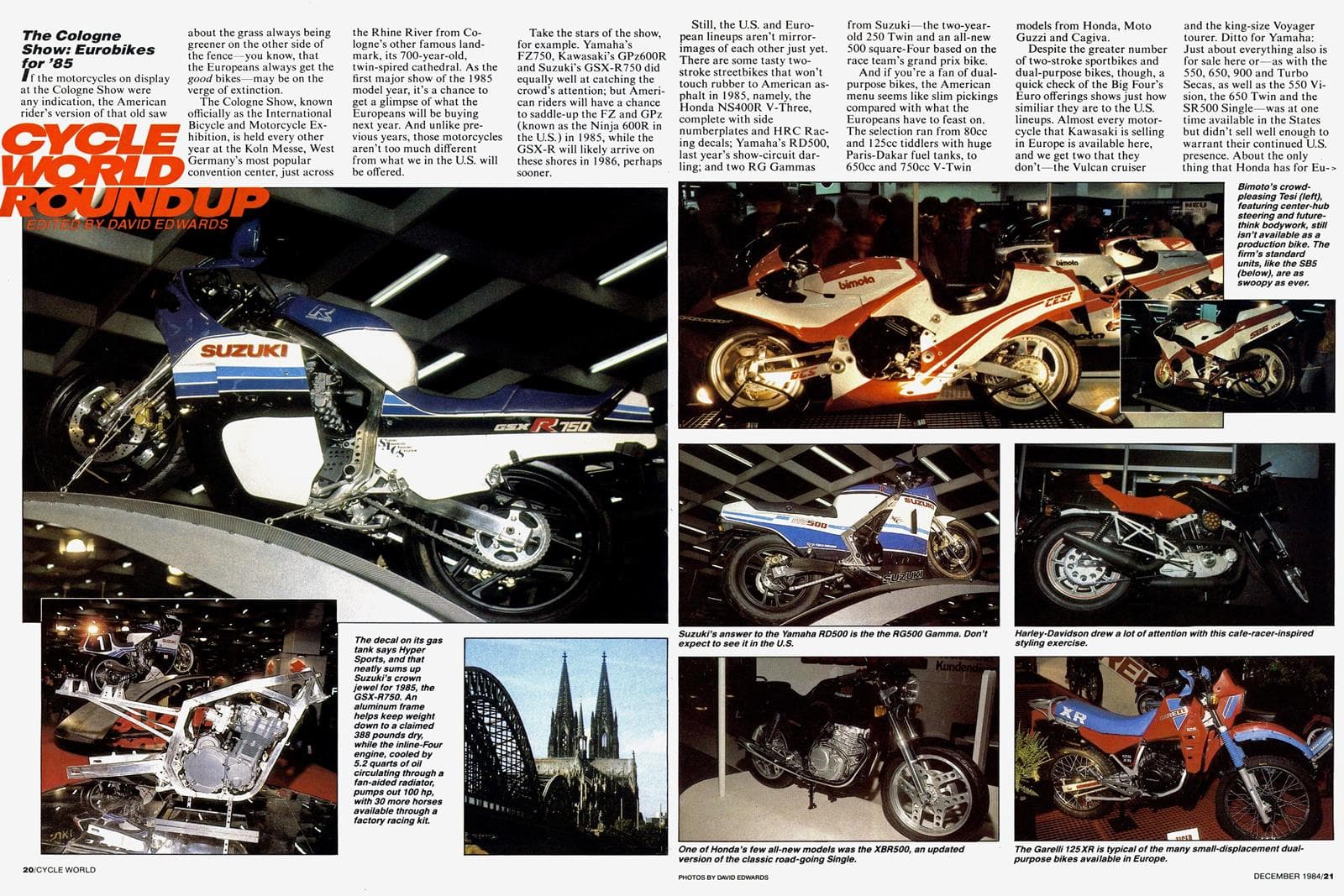
The show bike on Suzuki’s stand, from Cycle World’s December 1984 report on the Cologne show Source: Suzuki brochures and advertising, 1984–85
November 1984
This motorcycle
This motorcycle is built
Frame number GR75A100022 is built in Belgium from parts made in Hamamatsu.
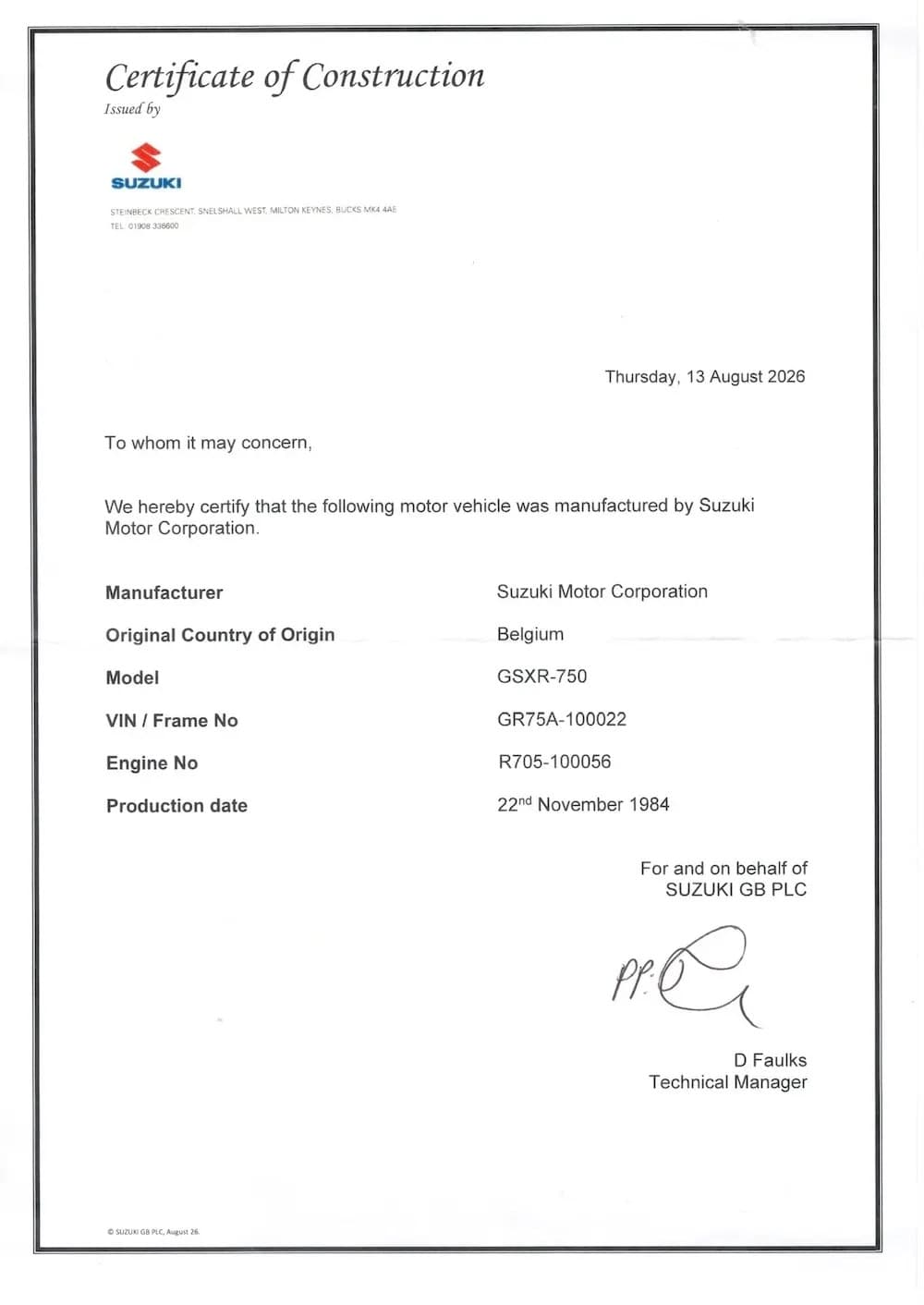
Certificate of Construction, issued by Suzuki GB PLC on 13 August 2026 Source: Certificate of Construction, Suzuki GB PLC, August 2026
January 1985
This motorcycle
The first parts book
Suzuki’s first-edition parts book lists frames GR75A-100001 to 100045 separately from all later frames, which start at 100046. Frame 100022 falls in the first group.
Not every number in that range became a complete motorcycle. The earliest running examples went to track testing in Japan, and more were built as testing required.
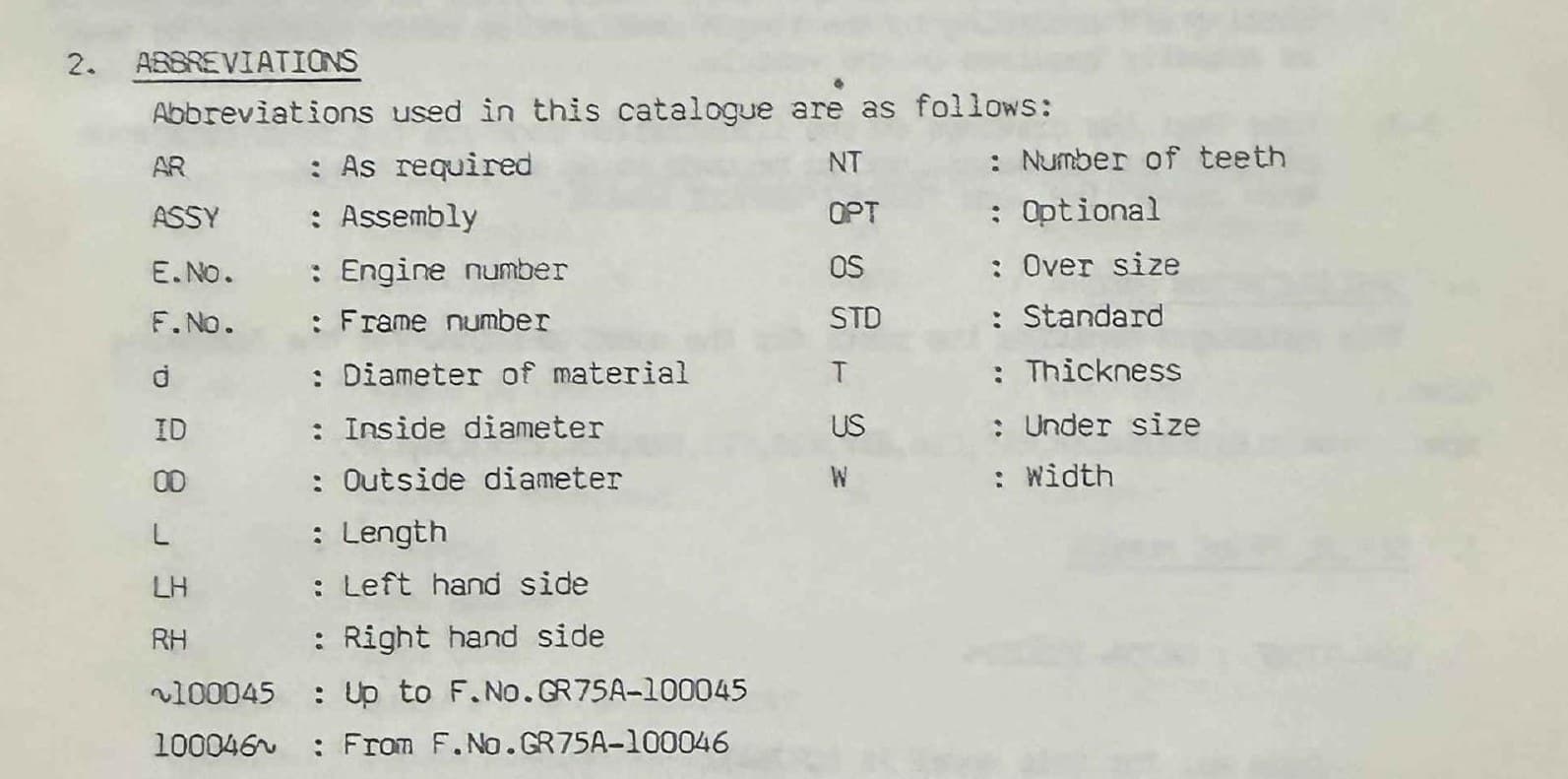
The preface of the first-edition parts book, splitting frames at 100045 and 100046 Source: Suzuki parts book, first edition, January 1985
25 January 1985
Production begins
The first production GSX-R750 leaves Suzuki’s Hamamatsu line.
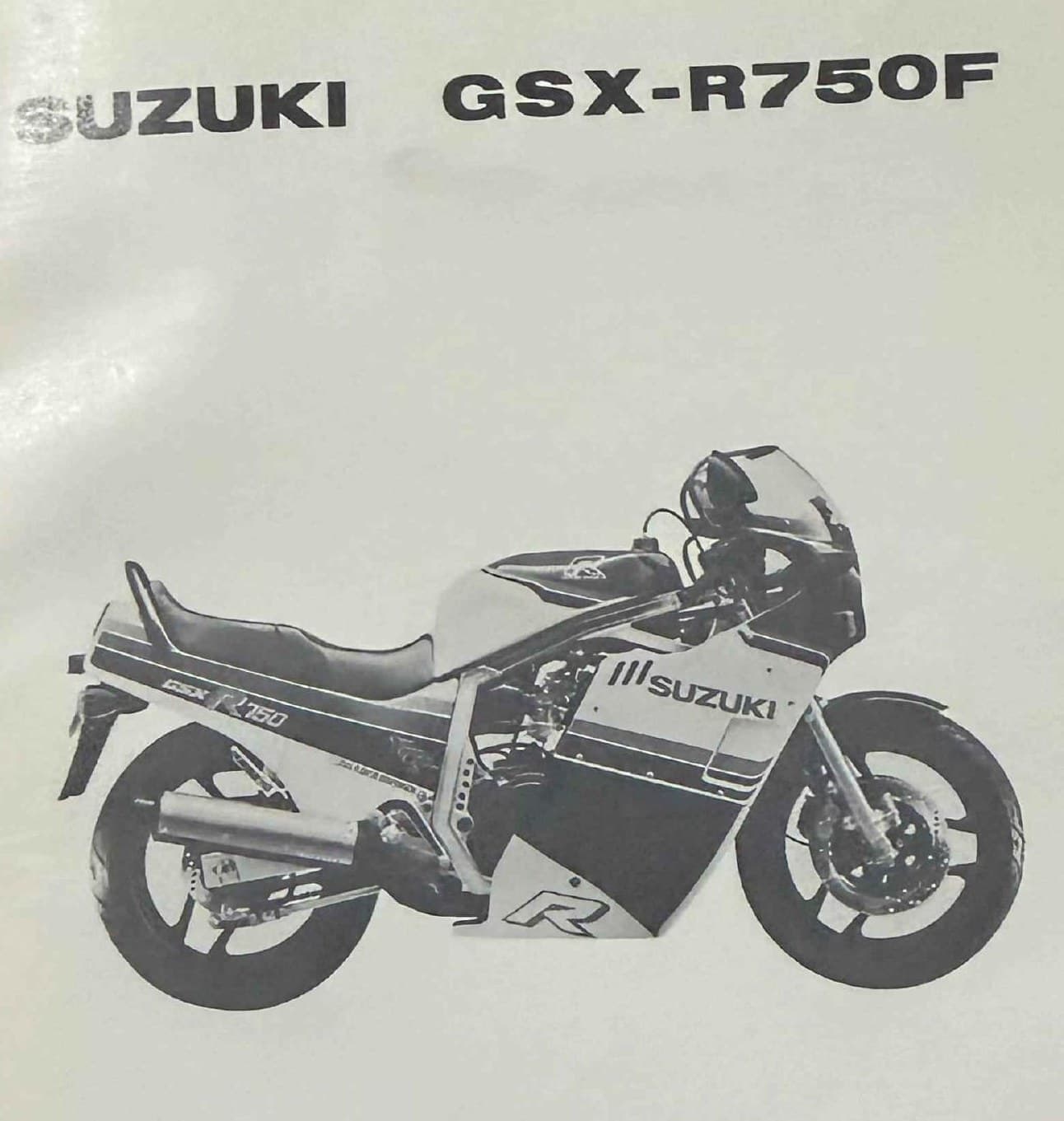
The production GSX-R750F, as pictured in the first-edition parts book Source: Classic Motorcycle Mechanics (UK), ‘The Ultimate R’, October 2016
12 February 1985
This motorcycle
First registration
First registration of GR75A100022 in Belgium.
Source: Belgian registration documents
1993
This motorcycle
Certificate of Conformity
Suzuki Belgium issues a Certificate of Conformity for the motorcycle.
Source: Certificate of Conformity, Suzuki Belgium, 1993
Today
This motorcycle
The only known survivor
The other pre-production motorcycles and parts, the Cologne show bike among them, were ultimately scrapped. This was standard practice for Japanese manufacturers.
Under Japanese tax law, a company pays fixed asset tax every year on business assets it owns, depreciable assets (shōkyaku shisan), assessed on 1 January. A prototype kept on the books went on costing tax year after year, and only scrapping removed it from the ledger.
No trace of any other pre-production GSX-R750 has been found anywhere in the world. Frame number GR75A100022 is the only one known to survive.
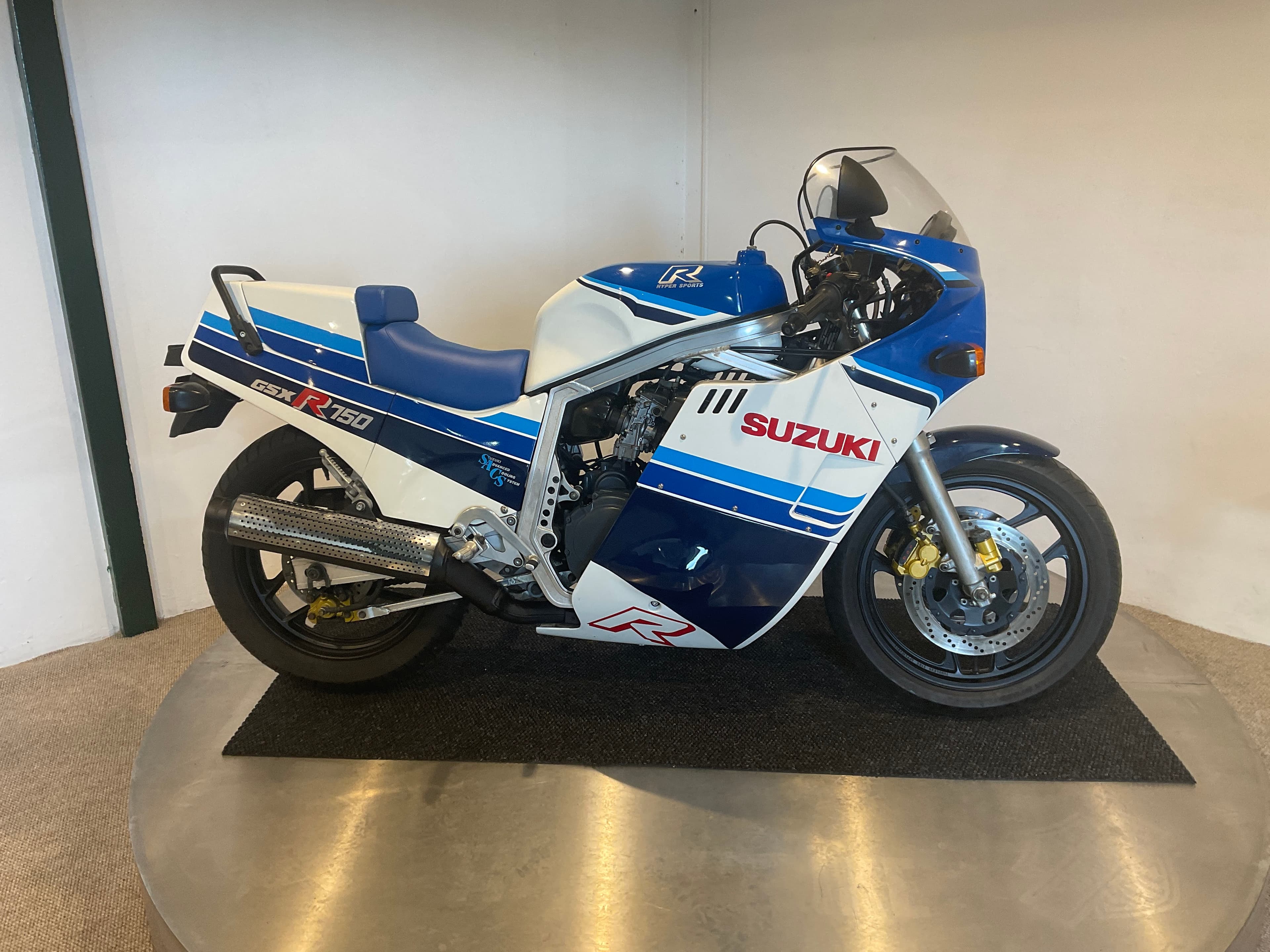
Frame GR75A100022 today Source: Japanese Local Tax Law, fixed asset tax on depreciable assets; owner’s research, 2021–2026